
Disclaimer: This article contains affiliate links. If you purchase through these links, we may earn a small commission at no additional cost to you. We only recommend products tested for quality and performance.
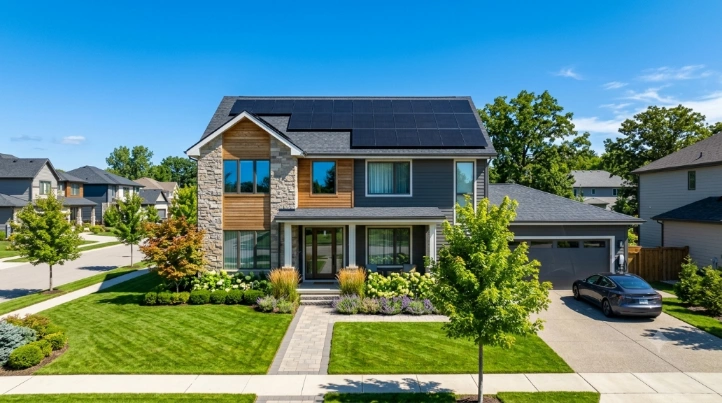
Switching to solar energy is one of the smartest financial investments a US homeowner can make. With rising utility costs and lucrative incentives, rooftop solar offers energy independence and massive long-term savings.
However, buying a residential solar power system isn’t a simple off-the-shelf purchase—it’s a 25-to-30-year financial commitment. Making the wrong choices can cost you thousands of dollars.
Before signing any installation contract, here are the 7 crucial factors every homeowner in the United States must evaluate in 2026.
1. Calculate Your Average Energy Consumption (kWh)
Before looking at panel types or brands, you need to determine your household’s actual electricity demand.
- Check Your Electric Bills: Review your power bills over the past 12 months to find your annual kilowatt-hour (kWh) usage.
- Average US Household Need: The average American home consumes around 850 to 900 kWh per month (~10,500 kWh annually).
- System Sizing: Knowing your consumption ensures you don’t under-size or over-size your system. A typical US residence requires a 6 kW to 10 kW solar setup.
2. Choose High-Efficiency Solar Panel Technology
Solar panel efficiency directly impacts how much power you generate in limited roof space.
- Monocrystalline PERC: Reliable, highly efficient, and the gold standard for residential roofs.
- TOPCon & N-Type Panels: Modern panels with superior efficiency, lower degradation rates, and higher heat tolerance.
- Bifacial Panels: Capture sunlight from both front and back surfaces—ideal for light-colored or flat roofs.
👉 RECOMMENDED READ: Check out the Top-Rated Portable Solar Generators & Kits on Amazon
3. Maximize the 30% Federal Solar Tax Credit & Local Incentives
Don’t leave money on the table. The US government and local utilities offer incredible financial perks:
- Federal Residential Clean Energy Credit: Claim a 30% tax credit on the total cost of your solar installation (including panels, equipment, labor, and battery storage).
- State Rebates & SRECs: Many states offer additional Solar Renewable Energy Certificates (SRECs), property tax exemptions, and cash rebates.
Note: Always consult a tax professional to ensure you qualify for the full 30% Federal ITC.
4. Understand Net Metering Policies & Solar Battery Storage (NEM 3.0)
How your local utility handles excess power determines your overall Return on Investment (ROI):
- Net Metering (Traditional / NEM 2.0): Credits you at or near full retail rates for power sent back to the grid.
- NEM 3.0 (e.g., California): Reduced export credits significantly. If you live in an NEM 3.0 state, adding a solar battery is practically essential to store excess energy for nighttime use.
👉 RECOMMENDED GEAR: Compare Top Smart Home Solar Battery Storage Systems
5. Assess Roof Condition, Angle, and Shading
Your roof is the foundation of your entire solar setup.
- Roof Lifespan: If your roof is over 15–20 years old, repair or replace it before installing solar. Removing and reinstalling panels for roof repairs later costs thousands.
- Orientation: In the Northern Hemisphere, South-facing roofs receive maximum sunlight, followed by West-facing roofs.
- Shading: Ensure trees, chimneys, or neighboring structures don’t shade your roof between 10 AM and 4 PM.
6. Evaluate Warranty Terms: Equipment vs. Performance
Never buy panels without checking the warranty fine print:
- Product/Equipment Warranty (10 to 25 Years): Covers hardware defects and manufacturing failures.
- Performance Warranty (25 to 30 Years): Guarantees the panels will still produce at least 80–85% of their original capacity after 25+ years.
- Workmanship Warranty (10 to 25 Years): Provided by the installer to cover installation defects and roof leaks.
7. Buying vs. Leasing vs. Solar PPA
How you finance your system determines your long-term return:
- Cash or Solar Loan (Recommended): You own the system, qualify for the 30% Tax Credit, and instantly boost your home’s equity.
- Solar Lease / PPA: $0 down sounds attractive, but the solar company keeps the tax credits, and the lease contract can complicate selling your home later.
👉 CHECK TOOLS: Best Digital Solar Testing & Monitoring Equipment
Final Verdict
Investing in rooftop solar panels eliminates rising electricity bills and delivers clean, reliable energy for decades. By opting for cash/loan ownership, utilizing the 30% Federal Tax Credit, and choosing Tier-1 equipment (like Enphase, REC, Qcells, or Tesla), you can maximize your long-term household savings.