
Disclaimer: This article contains affiliate links. If you purchase through these links, we may earn a small commission at no additional cost to you. We only recommend products tested for quality and performance.
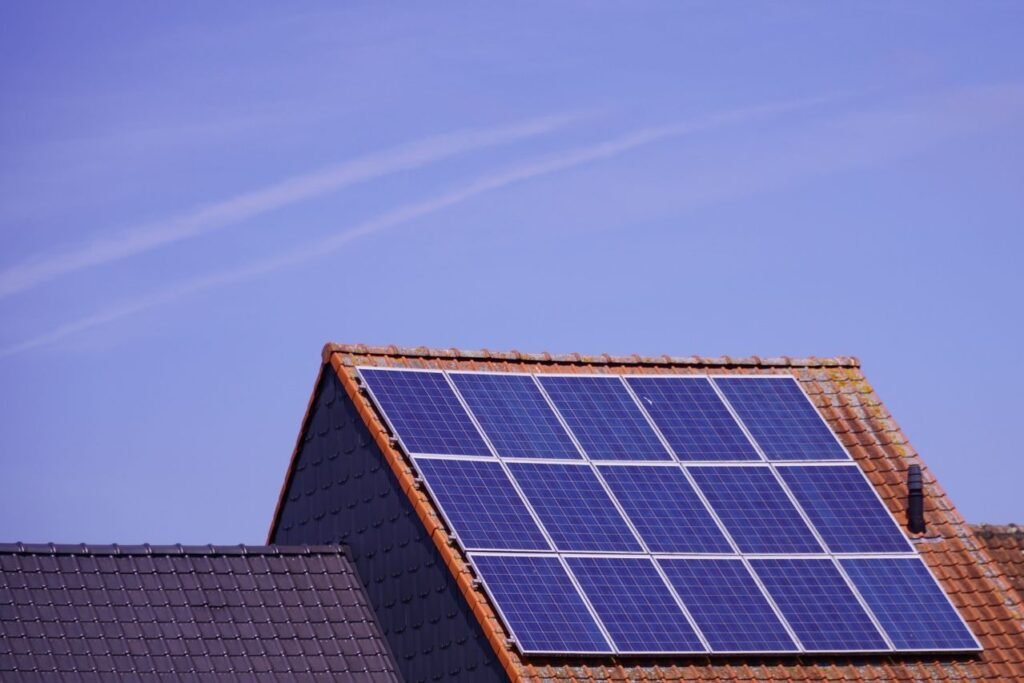
Upgrading your home to solar power is one of the smartest investments you can make in 2026. However, choosing the right equipment can quickly become overwhelming with the rapid evolution of photovoltaic technology.
If you are looking at modern solar installations, two primary options dominate the premium market: Mono PERC and Bifacial Solar Panels.
In this detailed guide, we break down the performance, efficiency, installation requirements, and return on investment (ROI) for both technologies to help you choose the best system for your home.
1. What Are Mono PERC Solar Panels?
Mono PERC (Monocrystalline Passivated Emitter and Rear Cell) panels are an evolution of standard monocrystalline technology. They feature a reflective passivation layer on the back of the solar cells. This layer reflects unused sunlight back through the cell, giving the photons a second chance to convert into electricity.
Popular high-efficiency models like the Renogy Monocrystalline Solar Panels have become the industry baseline for residential roofs.
Key Advantages:
- High Efficiency: Typically ranges between 20% and 22.5%.
- Space-Efficient: Delivers maximum power per square foot, making it ideal for standard suburban roofs.
- Cost-Effective: Offers a sweet spot between high-tier performance and reasonable upfront cost.
- Proven Performance: Excellent low-light performance, which is ideal for northern US states and the UK climate.
2. What Are Bifacial Solar Panels?
Bifacial solar panels capture sunlight from both sides. The front side absorbs direct sunlight, while the transparent back side captures ambient light and reflected light (known as albedo) from the roof or ground surface beneath the array.
Modern options like BougeRV Bifacial Solar Modules allow homeowners with flat roofs or ground mounts to capture significantly more energy throughout the day.
Key Advantages:
- Higher Total Energy Yield: Can generate 10% to 30% more power compared to single-sided panels under optimal conditions.
- Durability: Built with dual-glass (glass-on-glass) protection, offering high resistance to severe weather, wind, and hail.
- Longer Warranties: Many manufacturers offer 30-year performance warranties on bifacial modules due to their robust design.
Head-to-Head Comparison
| Feature | Mono PERC Panels | Bifacial Solar Panels |
|---|---|---|
| Light Absorption | Single-sided (Front side only) | Dual-sided (Front and back) |
| Average Efficiency | 20% – 22.5% | Up to 25%+ (combined output) |
| Upfront Cost | Moderate | Higher |
| Best Mounting Setup | Standard flush roof mounts | Elevated racks, flat roofs, or ground mounts |
| Ideal Environment | Any standard residential roof | Light-colored roofs, gravel, or snow-prone areas |
| Warranty Standard | 25 Years | 25 to 30 Years |
Which One Should You Choose for Your Home?
Choose Mono PERC If:
- You have a standard pitched roof: Flush roof mounts block the back side of the panel, negating the benefit of a bifacial setup.
- You want a budget-friendly setup: Mono PERC delivers top-tier reliability without requiring specialized mounting hardware.
- You live in an urban or suburban neighborhood: Perfect for homeowners looking to maximize energy output within limited rooftop square footage.
Choose Bifacial If:
- You have a flat roof or ground-mount space: Installing bifacial panels on elevated racks over a white TPO roof membrane or concrete patio maximizes light reflection.
- You live in a region with heavy snowfall: Snow acts as a natural reflector (high albedo), significantly boosting the back-side energy production during winter.
- You want maximum long-term output: If you have the budget for specialized racking, the extra 15–20% energy generation accelerates your long-term ROI.
⚡ Top Recommended Solar Equipment (2026 Picks)
If you are ready to build or expand your home solar setup, here are our top-rated panel recommendations available on Amazon:
- Best Overall for Rooftops: Renogy 100W/200W Monocrystalline PERC Solar Panel
(Best price-to-performance ratio for residential homes) - Best for High Output & Snow Areas: BougeRV 200W Bifacial Solar Panel
(Up to 30% extra generation with glass-on-glass protection) - Best All-in-One Off-Grid Kit: EcoFlow Solar Generator Kit
(Ideal for emergency backup power and DIY installations)
The Verdict
For most residential homeowners in the US and UK with typical pitched roofs, Mono PERC panels remain the most practical and cost-effective choice.
However, if you are planning a ground-mounted array, an elevated patio canopy, or have a bright flat roof, Bifacial solar panels offer superior lifetime performance and higher energy independence.
Frequently Asked Questions (FAQs)
Q1: Can bifacial solar panels work on a standard pitched roof?
While you can physically mount bifacial panels on a pitched roof, it is generally not recommended. Because the panels sit flush against the roof, sunlight cannot reach the back side, meaning you pay extra for a feature you cannot use.
Q2: Do bifacial solar panels generate power in winter?
Yes! In fact, bifacial panels often perform exceptionally well in snow. Snow reflects up to 80% of sunlight (high albedo), allowing the back side of the panel to produce significant energy even when the front side has light snow cover.
Q3: Are Mono PERC panels still good in 2026?
Absolutely. Mono PERC technology remains the gold standard for standard residential rooftop installations across North America and Europe due to its reliability, affordability, and strong energy yield.
Q4: How much extra electricity do bifacial panels generate?
Depending on the reflectivity of the surface underneath (such as light concrete, white roofing material, or snow) and the height of the mounting system, bifacial panels can produce between 10% to 30% more power than traditional single-sided panels.